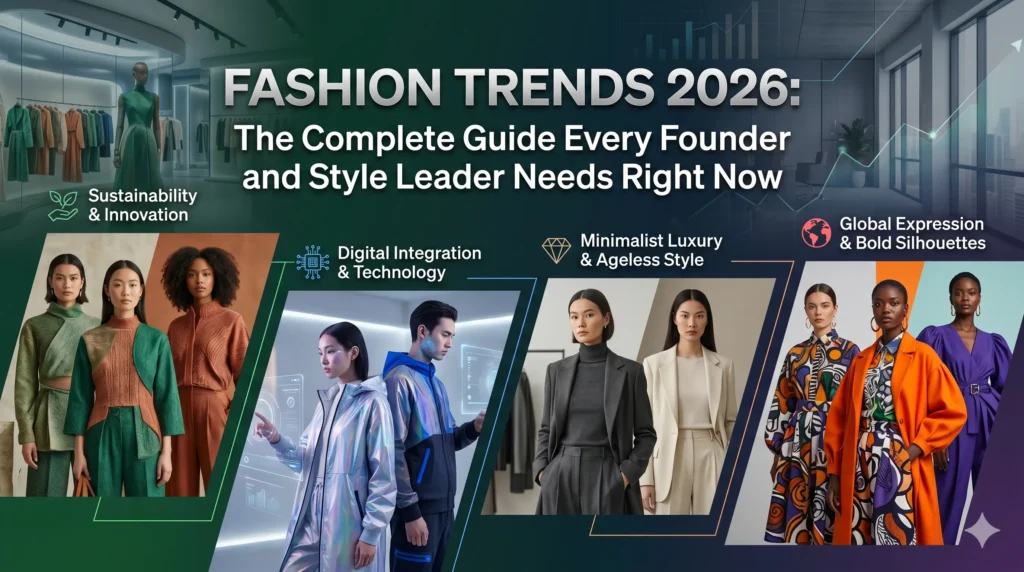
Fashion trends 2026 have split the industry into winners and casualties — and the data tells you exactly which side to land on.
Fashion Trends 2026 are bringing together comfort, creativity, technology, and individuality in exciting new ways. Fashion Trends 2026 are not limited to one particular style; instead, they encourage people to experiment with colors, silhouettes, fabrics, and accessories. From everyday streetwear to elegant occasion wear, Fashion Trends 2026 are expected to influence how people express their personality through clothing.
One of the biggest influences on Fashion Trends 2026 is sustainability. Fashion Trends 2026 are focusing more on eco-friendly fabrics, recycled materials, vintage clothing, and responsible production. Consumers are becoming more conscious about the environmental impact of their purchases, making sustainable fashion an important part of Fashion Trends 2026. Brands are increasingly exploring organic cotton, recycled polyester, plant-based materials, and durable designs.
Comfort continues to play an important role in Fashion Trends 2026. Fashion Trends 2026 are giving popularity to oversized shirts, relaxed trousers, loose jackets, wide-leg jeans, and comfortable co-ord sets. These styles combine a modern appearance with practicality, making them suitable for both casual and semi-formal occasions. The relaxed approach of Fashion Trends 2026 allows people to create stylish outfits without sacrificing comfort.
Fashion Trends 2026: Colors, Silhouettes, and What the Runways Confirmed
No fashion trends 2026 conversation starts anywhere except color — because Pantone, WGSN, and every major runway converged on a palette that signals a collective emotional reset.
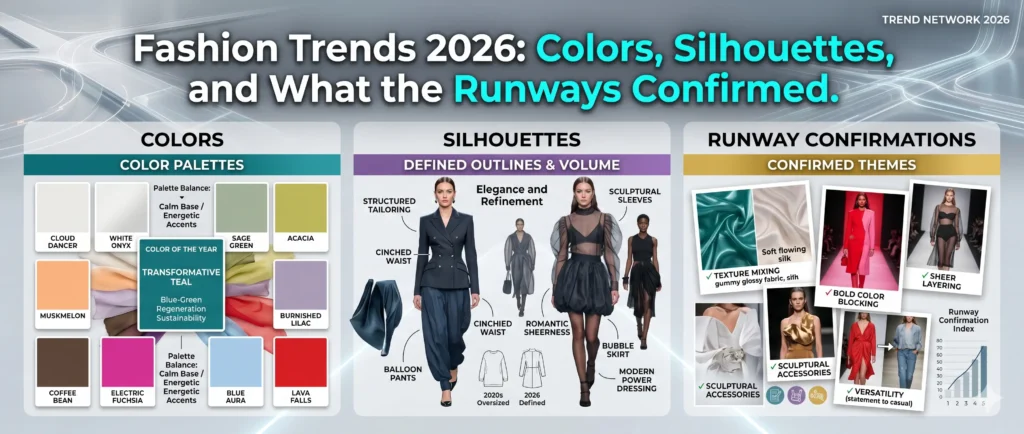
Pantone named Cloud Dancer (PANTONE 11-4201) as its Color of the Year for 2026: a soft, airy off-white that radiates calm and clarity. It functions as the neutral anchor beneath a year of expressive, bold accent hues. WGSN and Coloro’s joint forecast for Fall/Winter 2026/27 layers on Transformative Teal — a deep blue-green representing regeneration and sustainability — alongside warm earthy tones like Cocoa Powder and Wax Paper. Pinterest’s 2026 predictions pushed harder toward lurid tones: wasabi green, plum noir, and rich violet. The runways confirmed canary yellow, tomato red, electric lime green, and candy pink as the dominant seasonal statement colors.
The silhouette story in fashion trends 2026 runs two directions simultaneously. Spring/Summer 2026 brought romantic femininity — lace midi skirts forecast to grow +20% in the EU and +13% in the US (Heuritech), tiered ruffle skirts up +20% in the EU, and vanilla yellow dresses growing +23% among European women. Simultaneously, wide-leg and low-rise denim stages a 70s revival, with palazzo pants (+37%) and sculptural denim with cocoon sleeves turning a wardrobe basic into an art statement.
Fall 2026 runway collections — from Prada, Alaïa, Dior, and Loewe — introduced what W Magazine calls “wardrobe dressing”: pieces designed to be lived in and mixed over time, not styled into head-to-toe looks. Prada demonstrated the concept literally, sending 15 models to strip away layers with each runway pass. Dior’s Jonathan Anderson built garments that appeared heavy in houndstooth but used airy pleated silk underneath. Loewe sent a model in a rubber garment that mimicked wind-tunnel distortion. Fashion trends 2026 at the luxury end reject spectacle for substance.
The key takeaway: Fashion trends 2026 run two simultaneous registers — expressive maximalism at street level and deliberate, quality-focused wardrobe investment at the luxury tier. Brands that try to straddle both without a clear positioning choice will convert neither customer.
Fashion Trends 2026: The Sustainability Shift That Moved from Optional to Legal
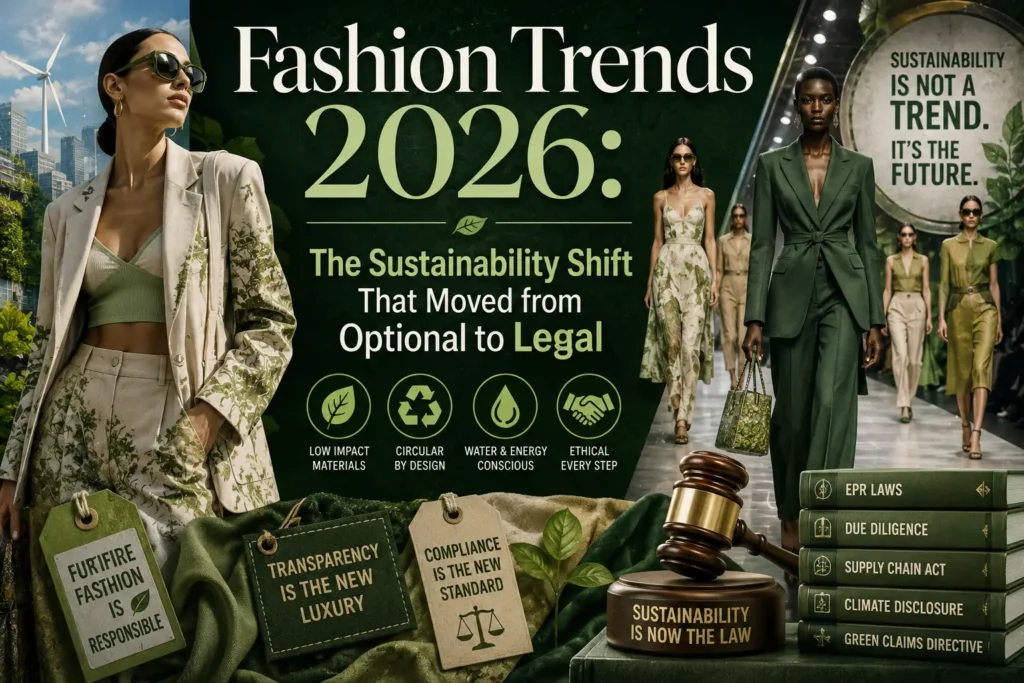
Fashion trends 2026 make sustainability impossible to treat as a marketing decision. The EU’s incoming Digital Product Passports and eco-score labeling mandates require verifiable, traceable supply chain data on every garment sold in European markets. Lectra’s 2026 industry analysis is unambiguous: sustainability has shifted from choice to legal obligation.
That regulatory pressure arrives at the same moment consumer behavior confirms the direction. Seventy-three percent of global consumers say they’d change consumption habits to reduce environmental impact. Yet fast fashion grew 10.74% from 2024, driven by ultra-fast giants like SHEIN — which demonstrates that intention and behavior still diverge at the price point. The resolution of that tension defines one of the central fashion trends 2026: the rise of maximalist sustainability.
Fashion trends 2026 in the sustainable segment no longer mean muted neutrals and quiet minimalism. They mean certified organic cotton, hemp, linen, and bamboo deployed in bold, expressive silhouettes. Brands like Stone Island and Daily Paper build SS26 collections around self-determination and individual narrative — using sustainable fabrics not as a constraint but as a creative foundation. WGSN’s color palette for SS26 confirms the alignment: sage green, recycled-material-friendly earth tones, and bio-resin iridescent finishes all appear on trend forecasts because they perform beautifully on eco-certified fabrics.
The secondhand market sits at the exact intersection of fashion trends 2026 and business logic. McKinsey’s State of Fashion 2026 report projects the resale market will grow two to three times faster than the primary market through 2027. More critically, the data refutes the cannibalization fear: consumers across the UK, US, and China use resale platforms to research aspirational brands before buying firsthand. Resale isn’t competition — it’s discovery.
The key takeaway: Brands that build traceability now gain a marketing asset. Brands that build it reactively gain a compliance form. Fashion trends 2026 reward the former with consumer trust and EU market access; they penalize the latter with audit exposure and positioning confusion.
Fashion Trends 2026: How Technology Rewired How Style Gets Made and Sold
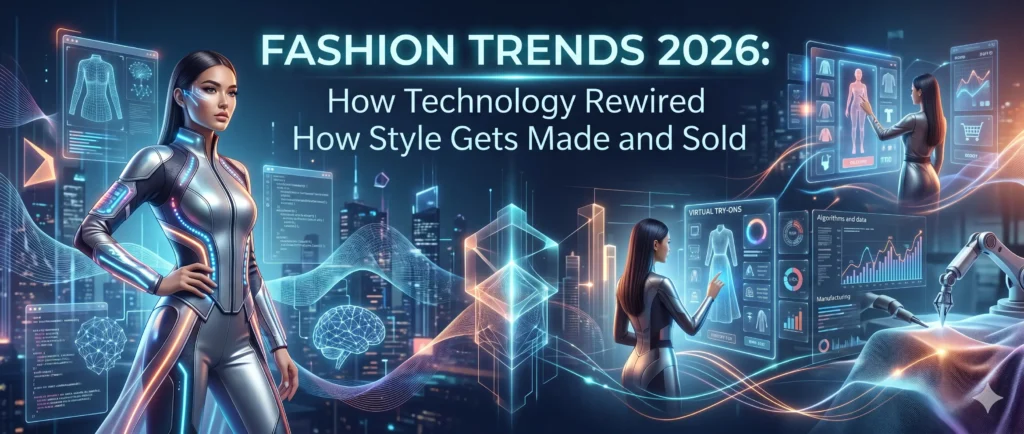
Technology sits inside every layer of fashion trends 2026 — from how trends get spotted, to how inventory gets bought, to how consumers discover product.
AI-driven forecasting firms like Heuritech and Trendalytics now track real-time social media visual data, search signals, and purchase behavior to generate trend predictions with a specificity traditional seasonal buying cycles can’t match. Google’s spring 2026 trending fashion data shows the speed of these shifts in real time: searches for “silk scarf” hit all-time highs; “jelly flats” surged 360% in a single month; “chunky necklace” reached peak search interest. Brands using AI inventory systems captured those surges. Brands on quarterly buying cycles missed the window.
Wearable technology entered the fashion trends 2026 mainstream not as gadgetry but as identity expression. Trendalytics identifies “cute tech” — stylish Bluetooth audio devices, health-tracking accessories designed for camera presence, wearables that work in physical and virtual spaces simultaneously — as a major growth category. The emotional design framework matters: these products succeed when they feel like extensions of the wearer’s personality, not attachments to their physiology.
Generative Engine Optimization (GEO) is the new frontier reshaping how fashion trends 2026 reach consumers. As AI shopping agents replace keyword search, brands that structure product data for machine readability — rich metadata, verified attributes, clear sustainability claims — will appear in AI-generated recommendations. Lectra names this shift “agentic commerce” and positions it as the next critical evolution in retail strategy. Brands that treat product data as a technical maintenance task rather than a discovery asset will disappear from AI-generated results before they notice they’re gone.
Color is another major feature of Fashion Trends 2026. Fashion Trends 2026 are encouraging people to move beyond traditional neutral shades and experiment with bright colors, striking combinations, and expressive prints. Vibrant blue, energetic red, rich green, warm orange, and playful pastel shades can become important choices in Fashion Trends 2026. Graphic prints, abstract patterns, stripes, and artistic designs can also add personality to modern outfits.
Streetwear Influence
Streetwear remains an important part of Fashion Trends 2026 because it combines fashion with everyday comfort. Fashion Trends 2026 are expected to include relaxed denim, statement T-shirts, sneakers, bomber jackets, cargo trousers, hoodies, and sporty accessories. The influence of social media and youth culture continues to make streetwear a powerful element of Fashion Trends 2026, especially among younger consumers.
The key takeaway: Fashion trends 2026 run on real-time data infrastructure. Speed between trend signal and inventory response is now a competitive differentiator, not a logistics metric.
Technology is creating new possibilities within Fashion Trends 2026. Fashion Trends 2026 are increasingly connected with digital design, smart fabrics, artificial intelligence, virtual fashion, and innovative clothing technologies. Designers can use advanced digital tools to experiment with patterns and silhouettes before producing physical garments. As technology develops, Fashion Trends 2026 may also introduce clothing that provides greater functionality, comfort, and personalization.
Fashion Trends 2026: The Consumer Who Buys Less but Demands More
The consumer driving fashion trends 2026 made a fundamental behavioral shift: they buy less, spend more per purchase, and treat every buying decision as a statement about who they are and what they value.
Euromonitor’s 2026 Lifestyles Survey confirms that across income levels, consumers redirect discretionary spend toward experiences — travel, wellness, cultural immersion — and when they do buy fashion, they buy for identity, not inventory. The concept of “wardrobe dressing” that dominated Fall 2026 runways — Alaïa, Celine, Loro Piana, Ralph Lauren all built collections around it — reflects exactly this consumer psychology. Buy the piece that lasts, not the look that expires.
Fashion trends 2026 in streetwear reflect the same dynamic at a younger demographic. Google Trends data shows “oversized hoodies streetwear” hit a search index of 100 in February 2026 — its highest point ever — up from 14 in December 2025. Graphic tees streetwear interest doubled between August 2025 and February 2026. Sixty percent of streetwear consumers fall under 25 years old, and 40% of streetwear purchases connect directly to celebrity collaborations or brand partnerships.
The luxury-streetwear collision remains the highest-visibility format inside fashion trends 2026. Gucci, Off-White, Heron Preston, and Palm Angels define the intersection where luxury heritage meets cultural credibility. The mechanism works commercially because it serves both sides: luxury accesses cultural relevance; streetwear accesses premium positioning. Both capture margin and press simultaneously.
Nostalgia runs deep through fashion trends 2026 across all segments. Y2K references dominate Fall 2026 collections — 7 For All Mankind’s Nicola Brognano built his entire debut around a Paris Hilton-era character, while Marc Jacobs brought back ultra-slim silhouettes with tights and leather shorts. Google confirms: search interest in “cropped pants,” “Capri pants,” “Mary Jane shoes,” and “ballet flats” all hit five-year or all-time highs in 2026. Romantic lace — “lace tops” at an all-time search high — and polka dots at a 10-year search peak round out the nostalgia signals.
The key takeaway: Fashion trends 2026 reward brands that treat identity as a product feature, not a marketing message. Consumers already decided what they value; they select brands that confirm it.
The Window on Fashion Trends 2026 Is Open Now — Not Next Season
Fashion trends 2026 move faster than seasonal buying cycles, reward supply chains built for traceability, and favor brands that read consumer psychology as carefully as they read runway reports. Build for the consumer who buys less but means more — and the market position follows.