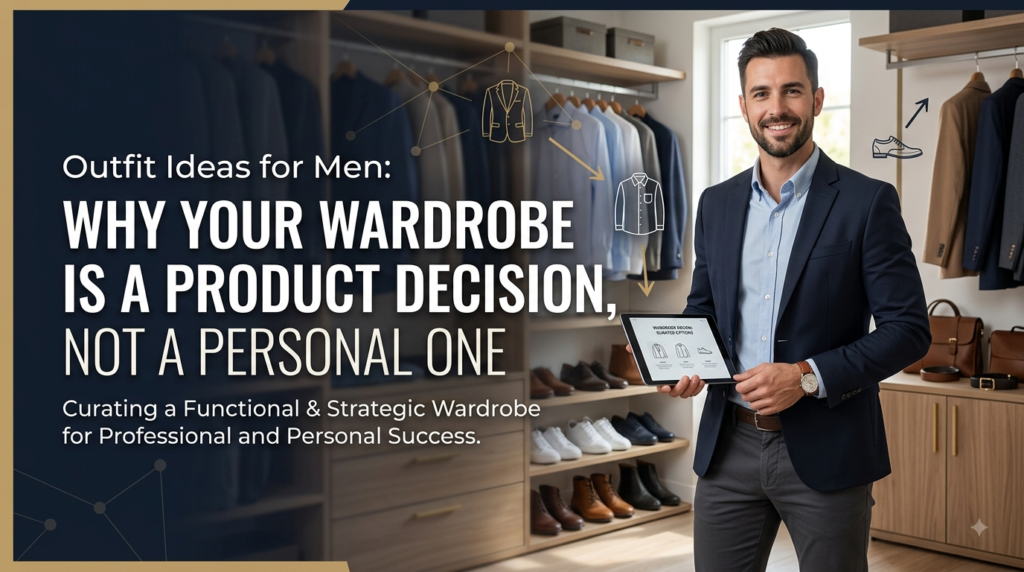
A founder who ships a broken UI apologizes for thirty seconds; a founder who shows up in a wrinkled t-shirt to a term sheet meeting pays for it in every meeting after that.
You already know how to evaluate ROI on ambiguous inputs — you do it with hiring, with GTM spend, with which feature to cut. Clothing deserves the same treatment. Good outfit ideas for men aren’t about vanity; they’re a low-cost, high-leverage signal that changes how investors, candidates, and customers read you before you say a word. Below are four concrete, testable moves, not style theory. say a word. Below are four concrete, testable moves, not style theory.
Most outfit ideas for men floating around the internet are written for people with unlimited free time: seasonal lookbooks, twelve-step “capsule wardrobe” guides, influencer hauls. None of that maps to a founder’s actual constraints — a ten-minute morning, a calendar full of context switches, and zero tolerance for decisions that don’t compound. The outfit ideas for men in this article are filtered for exactly one thing: does this reduce decision time while increasing signal quality. If a suggestion fails that test, it’s cut.
1. Build a Uniform, Not a Wardrobe
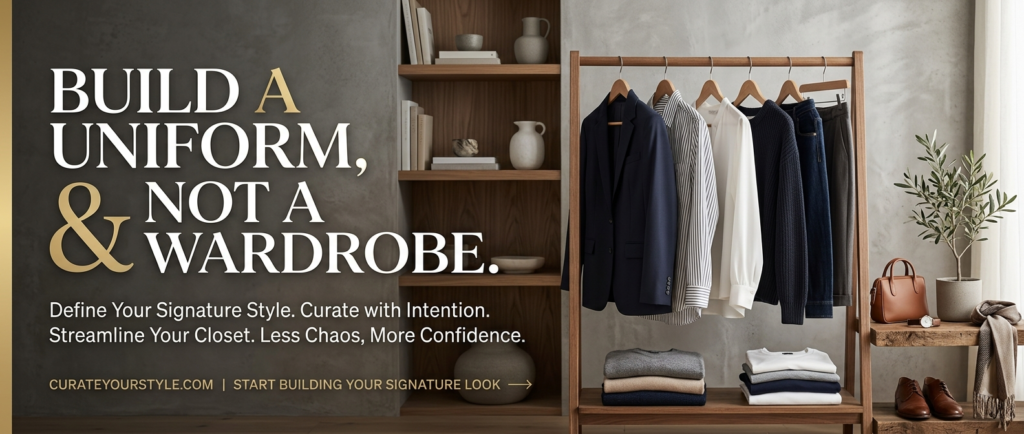
Every hour spent deciding what to wear is an hour not spent on your roadmap. The fastest founders solve this the way they solve config sprawl: they standardize.
A uniform means picking two or three interchangeable outfit ideas for men that work across 80% of your week — investor calls, all-hands, casual dinners with a co-founder — and repeating them. Steve Jobs’ black turtleneck gets cited too often, but the underlying logic holds up: decision fatigue is a real cost, and clothing decisions compound daily in a way code reviews don’t.
A workable Series A uniform:
- A well-fitted navy or charcoal blazer, unstructured (no shoulder pads, no stiffness)
- A plain crewneck or Oxford shirt in white, light blue, or heather grey
- Dark, straight or slim (not skinny) trousers or dark selvedge denim
- Minimalist leather sneakers or a clean derby shoe
Rotate three shirts, two trousers, one jacket. That’s six real outfits from five items, and you never touch the “what do I wear today” decision again. Test it for two weeks and track how much faster your mornings move — this is the same instrumentation instinct you’d apply to a checkout funnel.
2. Fit Beats Price Every Time
Founders overspend on brand names and underspend on tailoring, which is backwards. A $60 shirt that fits your shoulders and doesn’t balloon at the waist reads as more competent than a $400 shirt that doesn’t.
The data on this is consistent across retail and behavioral research: people extrapolate competence and trustworthiness from visual coherence, and fit is the single biggest driver of whether an outfit looks “coherent” versus “borrowed.” A jacket that pulls across the back, sleeves that swallow your hands, or trousers pooling at the ankle undercut everything else you’re wearing, regardless of the label sewn inside.
Practical fix: find one tailor near your office and use them the way you use a code reviewer — as a standing checkpoint, not a one-off fix. Bring in three items you already own (one blazer, one shirt, one trouser) and get them taken in. Total cost is usually under $150 and the improvement is immediate and visible in every photo, every pitch deck team page, every LinkedIn headshot going forward. This is the single highest-ROI move in this article. If you do nothing else, do this.
3. Context-Switch Your Outfit Like You Context-Switch Your Pitch
You don’t pitch a Series A partner the same way you pitch a design partner customer. Your outfit should context-switch the same way.
Three scenarios, three specific outfit ideas for men that avoid both extremes — the hoodie-as-rebellion cliché and the over-suited banker look that reads as out of touch at a startup:
- Investor meeting: Blazer, Oxford shirt (no tie), dark trousers, leather sneakers or derbies. Signals you take the meeting seriously without performing formality you don’t practice daily.
- All-hands or demo day: Quarter-zip or crewneck sweater over a collared shirt, dark jeans, clean sneakers. Reads as focused and approachable, not corporate.
- Customer dinner or conference: Unstructured blazer, plain tee or fine-knit crewneck underneath, chinos or dark denim. Works in a boardroom or a bar.
The mistake most technical founders make is wearing the same outfit to all three. It’s not wrong exactly, but it’s a missed signal — the same way sending an identical cold email to every persona is a missed signal. Match the outfit to the room the way you’d match messaging to a segment.
4. Buy Fewer, Better Pieces — Then Stop Shopping
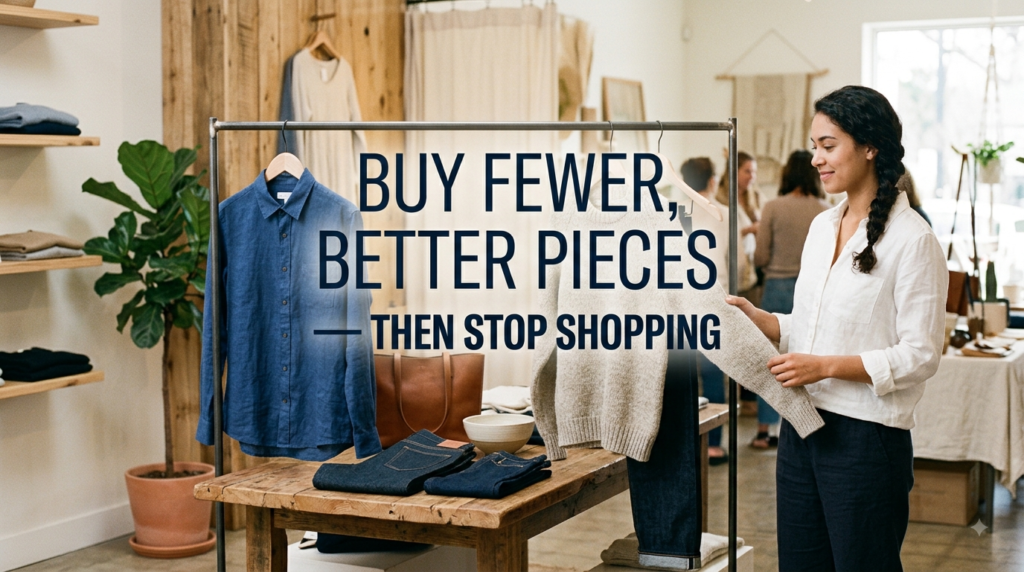
Founders who treat their wardrobe like a backlog end up with forty items and nothing to wear, the clothing equivalent of feature bloat. The fix is the same discipline you’d apply to a product roadmap: cut ruthlessly, then freeze scope.
A tight, high-ROI base layer for outfit ideas for men that actually get worn:
- 2 blazers (navy, charcoal)
- 5 shirts (3 solid, 2 subtle pattern)
- 3 trousers (1 dark denim, 2 chino or wool-blend)
- 2 pairs of shoes (1 sneaker, 1 derby or loafer)
- 1 overcoat for cold-weather cities
That’s 13 items producing dozens of combinations, all interchangeable, all fitted by the tailor from step two. Total spend, buying mid-range and prioritizing fit over brand, typically lands between $800 and $1,400 — less than most founders spend on a single conference sponsorship, and it pays out in every meeting for the next three years.
Once the base layer is built, stop. Adding a fourteenth shirt has near-zero marginal value; replacing a worn-out item does. Treat your closet like a lean product: ship the core, iterate slowly, resist scope creep. None of these outfit ideas for men require a stylist, a personal shopper, or a weekend lost to malls. That’s the point. The best outfit ideas for men for a Series A founder are boring on purpose — boring enough that nobody in the room remembers what you wore, only that you looked like you had it together. Memorable outfits are for people whose job is to be looked at; your job is to be trusted, and trust is built from consistency, not novelty.
5. Where Founders Get Outfit Ideas for Men Wrong
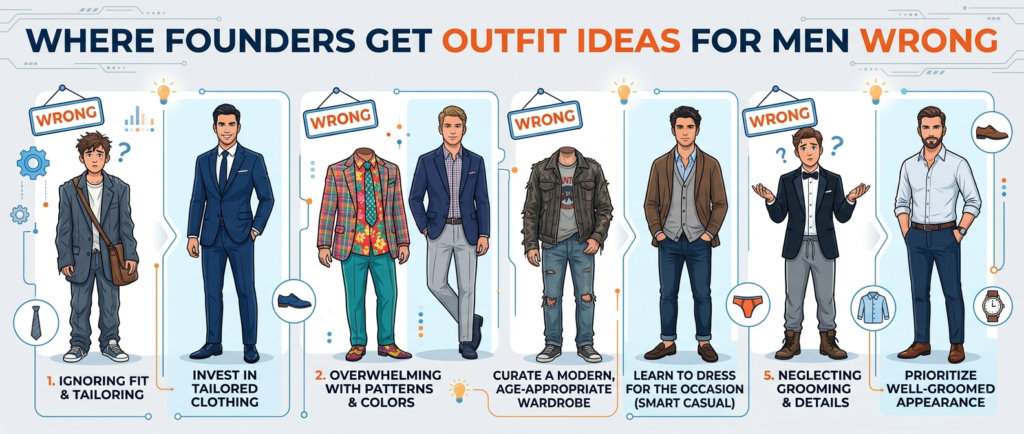
The failure mode isn’t laziness — it’s sourcing. Founders pull Outfit Ideas for Men from the same three places everyone else does: a menswear subreddit, an influencer’s affiliate links, or whatever a department store mannequin is wearing that week. None of those sources are optimized for your constraints, so the outfit ideas for men that come out of them are optimized for someone else’s life — someone with a stylist, a bigger closet budget, or a job where being noticed is the goal instead of a side effect.
Better sourcing looks like this: pick two or three men whose job and body type are close to yours — a peer founder, an operator you respect, someone in your investor’s portfolio — and copy their rotation directly instead of assembling outfit ideas for men from scratch. Screenshot their conference photos, their LinkedIn headshots, their demo-day outfits. This isn’t cheating; it’s the same pattern-matching you’d use to shortcut a technical decision instead of reinventing it. Good outfit ideas for men are rarely original — they’re just well-executed versions of what already works.
The Close
Your outfit is a distribution channel for the same signal your product is meant to send: this founder is deliberate, and this founder ships. Fix the fit first, standardize the rest, and stop thinking about it again until it’s time to replace something.