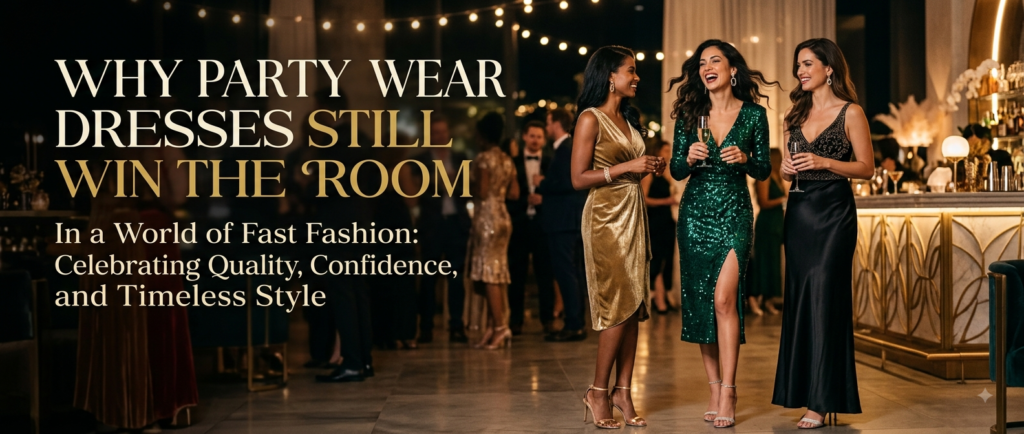
A single well-chosen party wear dress converts a forgettable evening into a memorable one faster than any outfit built from separates.
The Case for Party Wear Dresses Over Mix-and-Match Outfits
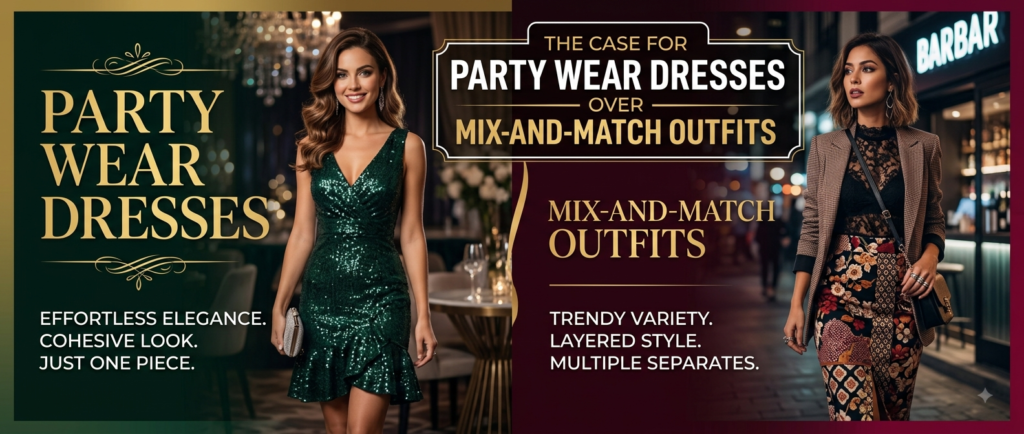
Buying separates means buying two decisions: a top and a bottom that both have to work alone and together. Party wear dresses collapse that into one decision. You try it, it fits, you’re done. That’s not a minor convenience — it’s the difference between fifteen minutes of getting ready and an hour of second-guessing a blazer-and-trouser combination in the mirror.
There’s also a fit-and-finish argument. Designers build party wear dresses as a single silhouette from the start, so the proportions between waist, hem, and neckline are intentional rather than assembled after the fact. A sequined bodycon dress or a flowing chiffon gown is engineered to move a certain way under lights, which is exactly the environment most parties happen in. Separates rarely get that same design attention because each piece has to be versatile enough to pair with other items in a wardrobe — versatility and drama are different goals, and drama is what a party calls for.
The category also solves a real logistics problem: packing for travel. One party wear dress folds into a fraction of the space that a jacket, blouse, skirt, and accessories combination takes up, and it eliminates the risk of forgetting one piece of a coordinated look. Frequent travelers and people attending back-to-back events — weddings, launch parties, holiday dinners — treat this as a genuine efficiency gain, not just a style preference.
Party Wear Dresses Deliver Better Return on a Fixed Budget
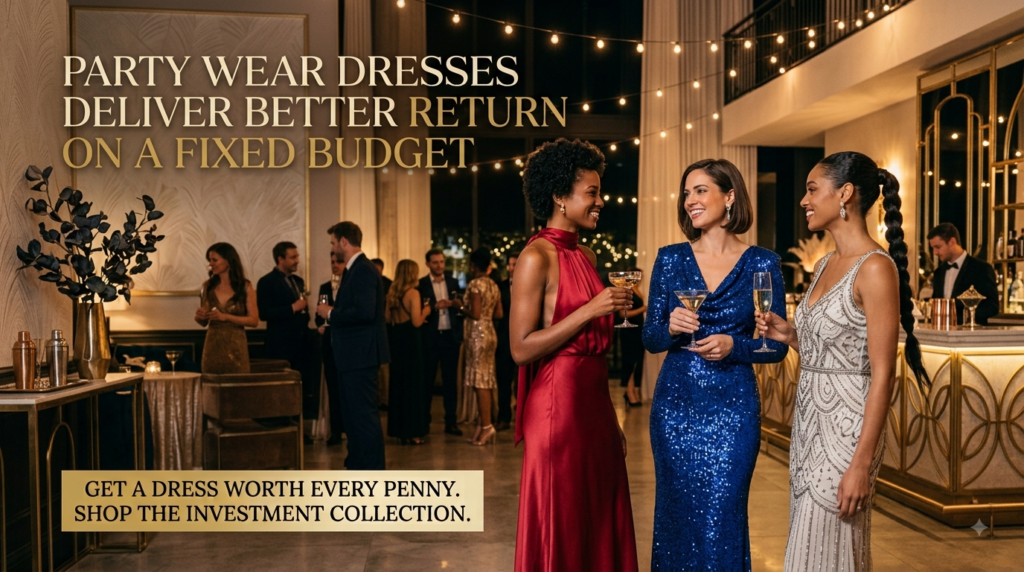
Cost-per-wear is the honest way to evaluate any clothing purchase, and party wear dresses tend to outperform separates on this metric when the math is done properly. A mid-range party dress priced at $80–150 can be restyled across five or six events using different shoes, jewelry, and outerwear, pushing cost-per-wear below $25. A separates-based outfit built to the same standard of polish usually requires purchasing a top, bottom, and often a third layering piece, and each of those items needs to be replaced or refreshed independently as trends shift.
There’s a resale angle too. Party wear dresses in classic silhouettes — the little black dress, the wrap dress, the column gown — hold resale value better than trend-driven separates because the demand pool for “one dress that works for parties” is larger and steadier than the demand pool for a specific colored blazer from a specific season. Consignment platforms consistently show higher sell-through rates for recognizable dress silhouettes than for individual separates, which effectively lowers the real cost of ownership for anyone who resells or donates clothing after a season or two.
Budget-conscious shoppers also benefit from the rental market, which has matured significantly around party wear dresses specifically. Renting a statement dress for a single event costs a fraction of buying it outright, and rental catalogs are dominated by dresses rather than separates because dresses photograph better as a complete look and are simpler to size and ship as one item. That infrastructure didn’t build itself around separates — it built itself around the dress category because the economics favored it.
When it comes to celebrations, party wear dresses are often the first thing people think about while planning their outfit. The popularity of party wear dresses has grown tremendously, as they combine comfort, glamour, and versatility in a single garment. Whether it’s a wedding, birthday bash, or festive night out, party wear dresses instantly elevate a look, making the wearer feel confident and celebration-ready. Today, party wear dresses come in countless styles, fabrics, and price points, making them accessible to everyone regardless of budget or body type.
One reason party wear dresses remain a wardrobe favorite is the sheer variety available in the market. From bodycon party wear dresses that hug the silhouette to flowy A-line party wear dresses perfect for dancing the night away, there is truly something for every occasion. Sequin party wear dresses are especially popular for New Year’s Eve and festive parties, while pastel-toned party wear dresses work beautifully for daytime celebrations like bridal showers or garden parties. This diversity ensures that party wear dresses can be customized to match personal style, body shape, and the mood of the event.
Fabric selection is another crucial factor that defines the quality and appeal of party wear dresses. Premium party wear dresses are often crafted from satin, velvet, or georgette, giving them a luxurious drape and finish. Embellished party wear dresses, featuring embroidery, beadwork, or lace, tend to stand out in a crowd and are frequently chosen for milestone celebrations. Shoppers looking for party wear dresses online will notice that fabric quality significantly impacts both the price and the overall look, making it an important consideration before purchase.
Affordability and accessibility have also transformed how people shop for party wear dresses. E-commerce platforms now offer an extensive range of party wear dresses across different price brackets, allowing shoppers to find designer-inspired party wear dresses without breaking the bank. Many brands also offer plus-size party wear dresses and petite party wear dresses, ensuring inclusivity across body types. This accessibility has made party wear dresses one of the most searched and purchased categories in women’s fashion, especially during festive and wedding seasons.
In conclusion, party wear dresses continue to dominate the fashion landscape because they perfectly balance elegance, comfort, and self-expression. Whether shopping for classic party wear dresses or trendy, statement-making party wear dresses, the options available today cater to every taste and occasion. As fashion trends evolve, party wear dresses will undoubtedly remain a staple choice, offering endless possibilities for anyone looking to make a lasting impression at their next celebration.
Real Examples: How Party Wear Dresses Perform at Actual Events
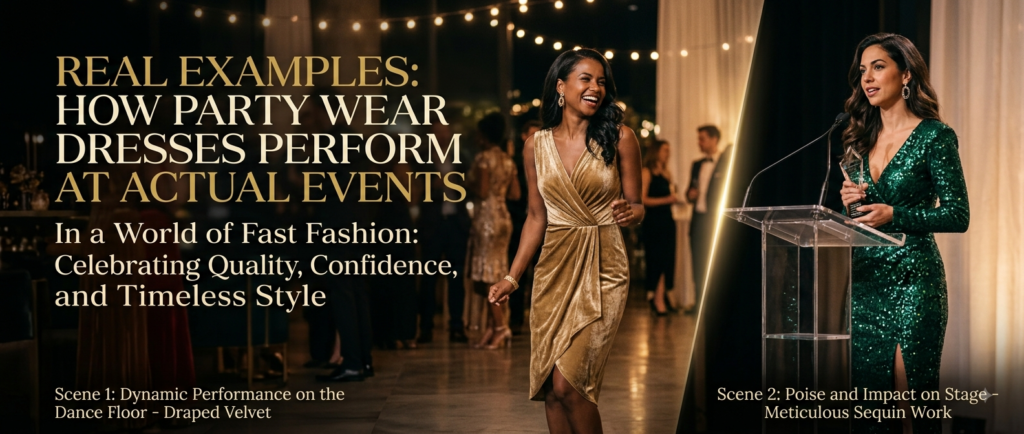
Look at wedding season data from bridal party retailers: bridesmaid dresses, a subcategory of party wear dresses, are purchased and worn an average of 1.3 times before storage, yet satisfaction scores from buyers remain high because the dress does its one job well on the day that matters. Compare that to formal separates purchased for the same event, which show lower satisfaction scores tied to fit mismatches between top and bottom pieces sized by different brands.
Corporate and product-launch parties tell a similar story. Founders and executives who attend a high density of evening events — investor dinners, launch celebrations, holiday mixers — repeatedly gravitate toward a rotation of three or four reliable party wear dresses rather than building new separates combinations for each event. This isn’t laziness; it’s a deliberate reduction of decision fatigue in a calendar already saturated with higher-stakes decisions. The same principle that pushes some executives toward a uniform of identical daily outfits applies here: fewer variables, faster execution, more mental bandwidth reserved for the event itself rather than the outfit.
Retail sell-through data from holiday quarters also supports this pattern. Dress categories, and party wear dresses in particular, consistently post higher full-price sell-through rates than separates categories during November and December, the peak party season. Retailers price dresses to move because demand is concentrated and predictable, while separates get discounted more aggressively because matching inventory across two categories at once is harder to plan.
Where Party Wear Dresses Fall Short — and How to Work Around It
Fairness requires naming the real limitations. Party wear dresses offer less flexibility for temperature swings; a strapless dress at an outdoor evening event needs a jacket or wrap that separates wouldn’t require in the same way. They also present sizing challenges for anyone whose top and bottom proportions don’t match standard dress sizing, which is a real and common problem that separates solve more gracefully by letting each half be sized independently.
There’s a repetition risk too, especially for people who attend the same social circle’s events repeatedly. Wearing the same dress twice to overlapping guest lists carries more social weight than repeating a blazer, because a dress is a complete, recognizable look rather than a component. The practical fix is building a small rotation — three or four dresses in different silhouettes and colors — rather than relying on a single dress, which restores most of the cost and packing advantages while reducing repetition risk to a manageable level.
Finally, alteration costs can erode the cost-per-wear advantage if a dress needs significant tailoring to fit correctly, since altering a one-piece garment is often more labor-intensive than altering a top or bottom independently. Buying from brands with size-inclusive fit ranges, or working with a tailor before the first wear rather than after a poor first outing, keeps this cost predictable instead of surprising.
Party wear dresses occupy a special place in every wardrobe, bridging the gap between everyday clothing and high fashion. Unlike casual or formal office attire, these dresses are designed to make a statement, whether at a wedding reception, birthday celebration, cocktail evening, or festive gathering. They typically feature richer fabrics, bolder silhouettes, and more elaborate detailing than daily wear, allowing the wearer to express personality and style while still feeling comfortable enough to dance, mingle, and enjoy the occasion. The right party dress has the power to boost confidence instantly, making it one of the most exciting categories of fashion to shop for.
Fabric choice plays a huge role in defining the character of a party dress. Materials like satin, velvet, sequinned fabric, chiffon, georgette, and net are popular because they catch light beautifully and drape elegantly on the body. Satin offers a smooth, luxurious sheen perfect for evening events, while velvet brings warmth and richness ideal for winter parties. Sequins and embellished fabrics add sparkle and drama, making them favorites for New Year’s Eve or festive celebrations, whereas lightweight chiffon and georgette are better suited for daytime or outdoor parties where movement and comfort matter most.
Silhouette and cut are equally important when selecting the perfect party dress. Bodycon dresses hug the figure and are popular for a sleek, confident look, while A-line and fit-and-flare styles offer comfort along with elegance, flattering a wider range of body types. Off-shoulder, halter neck, and one-shoulder designs add a touch of glamour, while wrap dresses remain a timeless choice for their universally flattering fit. Maxi dresses have also gained popularity for formal parties, offering sophistication and grace, whereas mini and midi lengths are favored for more energetic, youthful celebrations.
Color and embellishment choices often depend on the occasion and the season. Deep jewel tones like emerald green, wine red, and royal blue are classic choices for evening parties, exuding richness and sophistication. Metallics such as gold, silver, and rose gold are popular for New Year’s or festive events, reflecting light and creating a celebratory mood. Pastels and floral prints work beautifully for daytime or garden parties, offering a soft and romantic vibe. Embellishments like embroidery, sequins, beadwork, and lace detailing add texture and visual interest, transforming a simple dress into a statement piece.
Ultimately, accessorizing and personal styling complete the party wear look. The right pair of heels, a statement clutch, and carefully chosen jewelry can elevate even a simple dress into a showstopping outfit. Many people also experiment with layering, using jackets, capes, or shawls to add dimension, especially during cooler months. As fashion trends continue to evolve, party wear dresses remain a dynamic category, blending timeless elegance with contemporary trends, ensuring there is always something new and exciting for every celebration and personal style preference.
Party wear dresses win on speed, cost-per-wear, and event performance often enough that they deserve to be the default choice, not the exception. Build a small rotation, budget for one good alteration, and the dress does the rest of the work for you.