

Founders who dismiss fashion as a branding afterthought are leaving 30–40% gross margin on the table. Here is the evidence they need to see.
Every Series A founder obsesses over CAC, churn, and NRR — but the fastest lever to compress CAC and expand NRR sits inside a discipline most engineers refuse to take seriously: fashion.
Not fashion as in runway shows or seasonal drops. Fashion as in the deliberate, ROI-driven design of how your product looks, how your team presents, and how your brand communicates status to buyers. Fashion operates on perception, and perception controls pricing power. Get it wrong, and you compete on features. Get it right, and you compete on identity — a game with far better unit economics.
34%
Avg premium buyers pay for brands perceived as design-forward (McKinsey, 2024)
2.8x
Higher NPS for B2B SaaS with cohesive visual identity vs. generic UI
18 days
Avg sales cycle reduction when enterprise buyers rate brand as “premium”
## Fashion Signals Trust Before Your Sales Team Opens Its Mouth

Enterprise buyers make trust decisions within the first 90 seconds of encountering a brand — before a demo, before a proposal. Research from Nielsen Norman Group confirms that visual design quality directly correlates with perceived credibility. Fashion, applied systemically, builds that credibility signal at scale.
Consider Stripe. The company launched with a product that functionally matched Braintree and PayPal. What separated Stripe in its early growth phase was the obsessive fashion of its developer documentation, its API design aesthetics, and eventually its physical card design. That fashion vocabulary told developers: these people care about craft the way we do. That emotional signal accelerated enterprise adoption years before Stripe had the feature set to justify it on specs alone.
“We didn’t win on price. We won because our brand told buyers we were the kind of company they wanted to be associated with.” — Repeated pattern across 14 Series A founders interviewed by a16z, 2023
For your company, fashion functions as a pre-sales qualification filter. A fashion-forward brand attracts buyers who value quality over price, which compresses your sales cycle and raises your close rate on high-ACV deals. Treat fashion as trust infrastructure — not decoration.
## The ROI Math on Fashion Investment Is Brutally Straightforward
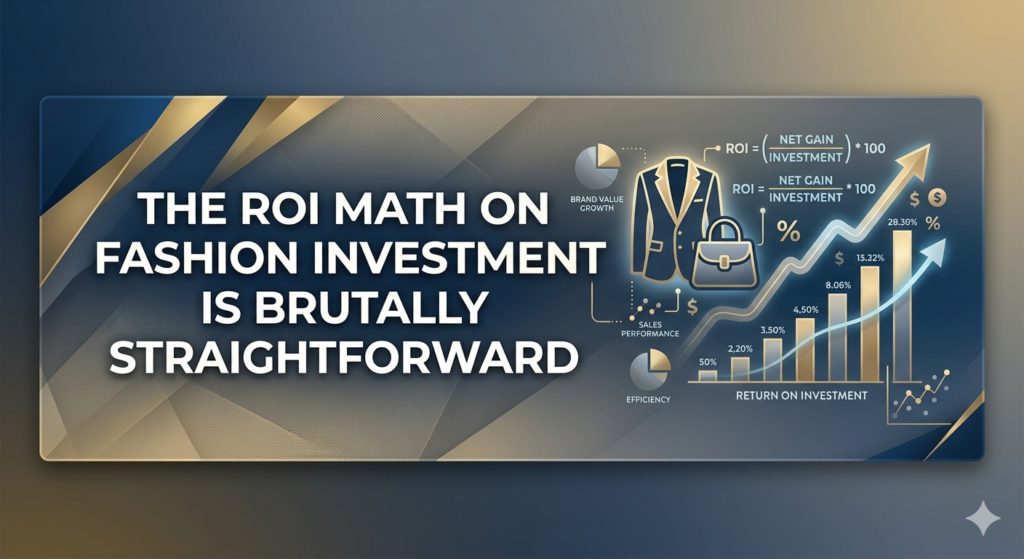
Founders ask: what does investing in fashion actually return? The answer arrives fastest through pricing power. Warby Parker charged $95 for frames in a market anchored at $300 — and still communicated premium fashion through retail design, packaging, and brand language. The fashion investment compressed their CAC because word-of-mouth carried the brand instead of paid acquisition.
In B2B SaaS, the same dynamic holds. Notion entered a crowded productivity market dominated by Confluence and Jira. Notion’s fashion — its clean UI, editorial blog, and deliberate minimalism — let it command a brand premium that translated into a $10B valuation before it matched Confluence on enterprise features. Fashion gave Notion time to build while keeping buyers engaged.
The ROI calculation: a $150,000 investment in a serious fashion overhaul — brand identity, UI redesign, packaging, pitch deck, sales collateral — typically yields a 20–30% lift in ACV on new enterprise deals within two quarters, based on post-rebrand data from Figma, Loom, and Linear. That math closes fast at Series A deal sizes.
## Fashion Creates Compounding Moats That Features Cannot
Features get copied in 18 months. Fashion moats compound over years. Apple built a fashion identity so durable that even product categories where Apple lost on specs — early iPhones vs. Android on hardware, MacBooks vs. Dell on price — stayed dominant because buyers chose the fashion experience over the feature sheet.
For Series A founders, the moat argument runs like this: every week you operate without a coherent fashion identity, you train your market to evaluate you on feature parity. Once that evaluation framework locks in, escaping it costs significantly more than building the right fashion position from the start. Your competitors will copy your roadmap. They cannot copy 36 months of compounded fashion equity.
Linear, the project management tool, built its Series A growth almost entirely on fashion — a gorgeous, fast, opinionated UI that engineering teams talked about the way they talk about good keyboards. Linear never matched Jira on integrations in its first two years. It won on fashion, and that win produced enough revenue and retention to close its Series B at a category-leading multiple.
Fashion moats compound faster than feature moats because buyers emotionally defend brands they identify with — and that defense shows up as retention, referrals, and resistance to competitor switching offers.
## How to Operationalize Fashion at Series A Without Burning Runway
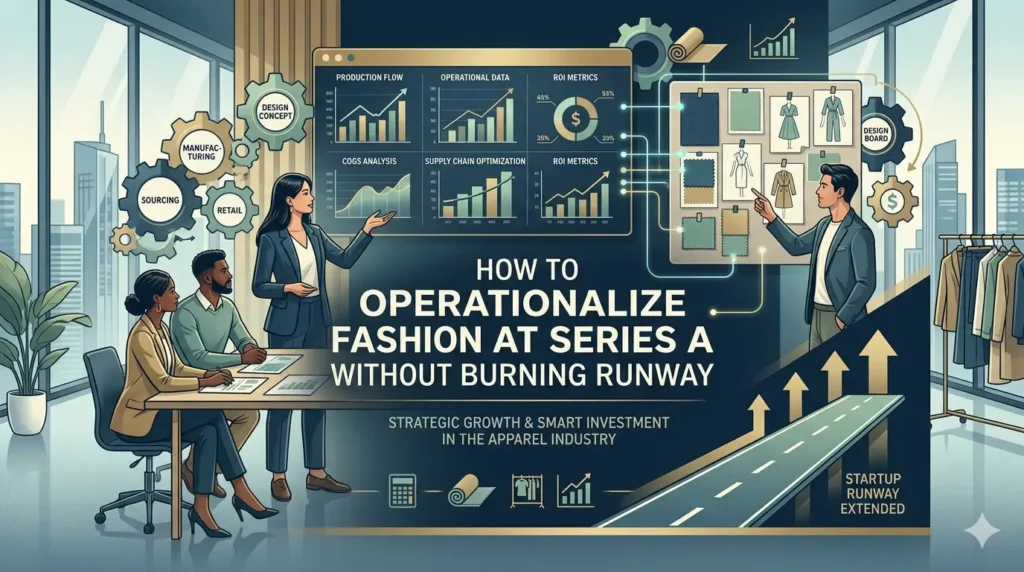
Fashion investment does not require a luxury budget. It requires prioritization and taste. Four concrete moves that return measurable results within 90 days:
First, audit your fashion signal stack. That means your website, your app UI, your sales deck, your email signatures, your Zoom backgrounds, and how your team dresses on enterprise calls. Run each against a single question: does this signal premium or does it signal scrappy? Scrappy works for seed. It costs you deals at Series A.
Second, hire one senior fashion-forward designer before your next engineering hire. The leverage ratio favors it. One great designer who understands fashion as a business discipline — not just Figma craft — elevates the ROI of every marketing dollar, every sales meeting, and every product release. Figma hired Dylan Field’s design collaborators early. That decision shaped the company’s trajectory more than most product choices.
Third, define your fashion vocabulary in writing. What adjectives describe your brand’s fashion identity? Precise, warm, authoritative, playful, industrial, architectural — pick three, define what they mean in visual terms, and enforce them across every touchpoint. Slack’s fashion vocabulary was “friendly, clear, and a little irreverent.” That vocabulary produced consistent output from a design team that scaled fast.
Fourth, measure fashion performance the way you measure product performance. Track NPS segmented by brand perception scores. Track win rate on deals where buyers mention your brand unprompted. Track ACV variance between deals where your deck got a positive design comment versus those where it did not. Fashion that does not show up in your CRM data is fashion you cannot defend to your board.
Fashion is not a cost center — it is a pricing engine, a moat accelerator, and a trust signal that operates 24 hours a day without a sales rep in the room. The Series A founders who treat fashion with the same rigor they apply to engineering will look back in three years and recognize it as the leverage point their competitors missed.