
Most founders treat the sale as an event. The ones scaling past $5M ARR treat it as a repeatable, instrumented process — and that difference compounds every quarter.
A SALE is one of the most popular ways for stores and brands to attract customers by offering products at reduced prices. Whether it is clothing, footwear, electronics, home products, or accessories, a SALE gives shoppers an opportunity to purchase their favorite products at prices lower than the regular selling price. For customers, a SALE can be an exciting opportunity to save money while enjoying quality products.
One of the biggest advantages of a SALE is the chance to save money. Customers can often find attractive discounts on products that they have been planning to buy. Seasonal s festival clearance and special promotional events make it easier for shoppers to compare prices and choose products within their budgets.
Is also beneficial for businesses because it helps increase customer traffic. Attractive discounts encourage new customers to visit a store and existing customers to make additional purchases. Businesses can also use a SALE to introduce new products, promote their brand, and clear older inventory before launching new collections.
1: The Sale Is a Data Problem, Not a Talent Problem
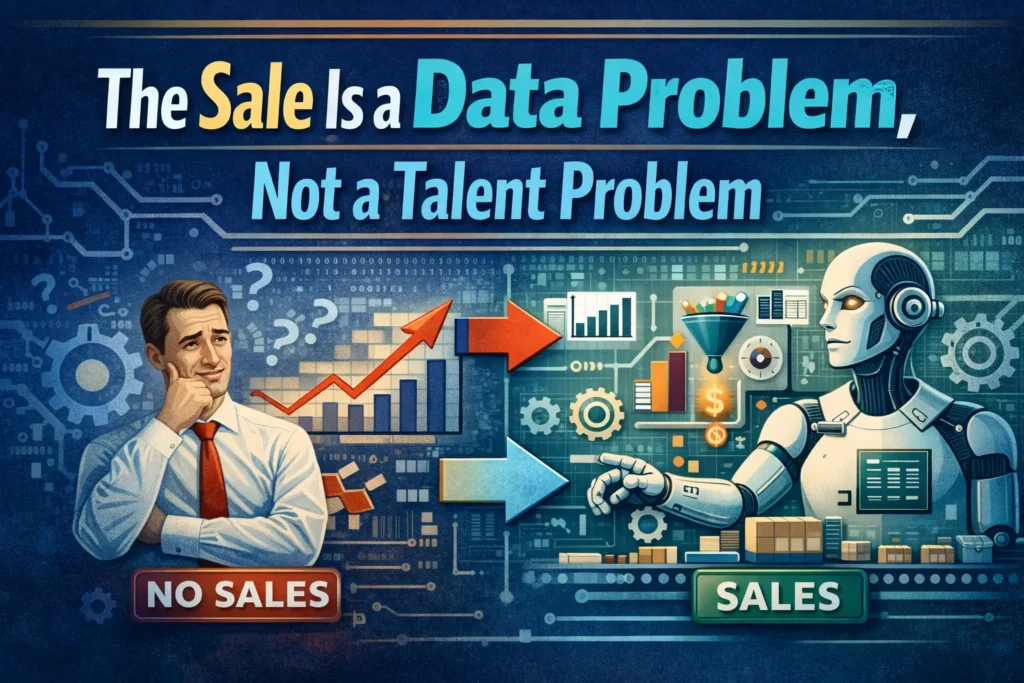
Founders who depend on “great salespeople” to close deals build a fragile machine. Stripe didn’t scale to $1B in revenue by hiring charming closers. They built systems that made every sale predictable, traceable, and improvable.
A sale generates data at every touchpoint — first reply rate, demo-to-proposal conversion, proposal-to-close ratio, days-in-stage. Most Series A companies track none of this with precision. They know their MRR. They don’t know why a sale stalled at the legal review stage for 18 days last month.
Fix this first. Instrument every stage of your sale pipeline the same way you instrument your product. Use a CRM that forces structured handoff notes — not free-text fields where “great call!” counts as a status update. HubSpot, Salesforce, and Attio all let you build mandatory fields per deal stage. Build those fields around decisions, not activities: “Budget confirmed: Y/N,” “Champion identified: Y/N,” “Technical win secured: Y/N.”
When you treat the sale as a data problem, you stop blaming the rep and start fixing the system. One founder at a developer-tools company discovered through pipeline data that 80% of their lost deals stalled after the technical review — not during it. The fix wasn’t better salespeople. It was a two-page integration guide sent before the technical review. Win rate jumped 22% in one quarter.
2: Speed Kills the Competition — Not Your Price

A slow sale is a dead sale. Buyers at enterprise companies juggle 12 initiatives at once. The vendor who creates momentum wins the deal — not the vendor with the best feature set.
Data from Gong’s 2024 Revenue Intelligence Report confirms this: deals that advance within 24 hours of a meeting close at 2.3x the rate of deals that go dark for 72+ hours after contact. Two days of silence lets doubt creep in, competitors re-enter, and internal champions lose political capital pushing your product forward.
Build a 24-hour rule into your sale process. Every meeting ends with a defined next step — not “I’ll send over the deck.” A defined next step means a calendar invite placed before the call ends, a specific deliverable with a due date, and an owner on both sides. This isn’t aggressive. Buyers respect sellers who run a tight process because it signals the product team runs tight processes too.
Apply the same logic to your legal and procurement cycle. Most founders discover during a sale that their MSA is a bottleneck only after they’ve lost three deals to it. Audit your contract. Shorten it. Publish a standard DPA. Have your security review package ready before procurement asks. Every hour you shave off the sale cycle is compounding ARR.
Speed also signals quality to technical buyers. A founder who responds to a security questionnaire in 48 hours instead of two weeks just won a trust signal that no marketing copy can manufacture.
3: The Proven Way to Engineer a Repeatable Sale Motion

Randomness is the enemy of scale. If your best sale month depends on your best rep having a great week, you don’t have a sales motion — you have a lottery.
A repeatable motion requires three things: a defined Ideal Customer Profile (ICP), a proven discovery framework, and a structured handoff between every team that touches the deal.
Start with ICP. Not “mid-market SaaS companies.” Something precise: “B2B SaaS companies with 50–200 engineers, using AWS, post-Series A, with a data engineering team of 3+, experiencing pipeline reliability issues.” That specificity lets you score inbound leads, prioritize outbound targets, and measure whether your sale motion attracts the right buyers or the wrong ones.
Next, build a discovery framework your whole team runs. The MEDDIC framework (Metrics, Economic Buyer, Decision Criteria, Decision Process, Identify Pain, Champion) isn’t theory — it’s the framework Salesforce, PTC, and dozens of high-growth B2B companies use to qualify deals before investing resources. Running MEDDIC on every sale opportunity means you stop chasing deals you’ll never close.
Finally, fix your handoffs. The SDR-to-AE handoff loses context. The AE-to-CS handoff loses context. Every lost context in a handoff is a risk. Use a structured Customer Fact Sheet — a living document that travels with the deal from first touch to renewal. It captures the buyer’s business problem in their words, the internal champion’s motivations, the technical requirements confirmed, and the competitive threats identified. One page. Mandatory. Non-negotiable.
4: ROI Framing That Closes the Sale Faster

Technical founders often build feature-heavy pitches. Buyers sign contracts based on business outcomes, not feature lists.
Every sale conversation at the C-suite level lives or dies on one question: “What does this cost me if I don’t act?” Frame your value around that question — and frame it in numbers the buyer already cares about.
Palantir doesn’t pitch “data integration.” They pitch “your operations team currently makes decisions on 14-day-old data. Our platform cuts that to 4 hours. For a logistics company your size, that means 3–6% reduction in inventory holding costs.” That framing turns a sale from a cost center into an investment with a measurable payback period.
Build a ROI calculator that uses the buyer’s own numbers — not your case study numbers. Ask four questions during discovery: current cost of the problem, current team hours spent on the problem, revenue at risk if the problem persists, and timeline pressure. Feed those numbers into a one-page ROI model. Share it during the proposal stage. When procurement asks “why this vendor,” your champion pulls out your numbers — not yours. Theirs.
This approach works because it removes subjectivity from CFO approving a $180K annual contract doesn’t need to trust your instincts. They need to show their board a 9-month payback period with conservative assumptions. Give them that asset. The sale closes itself.
During a SALE, customers should shop carefully instead of buying products simply because they are discounted. It is important to compare the original price with the discounted price and check the quality of the product. Reading product details, checking return policies, and comparing offers from different sellers can help customers make better purchasing decisions.
Online shopping platforms frequently organize a with special offers, coupons, limited-time discounts, and free delivery. These online events make shopping convenient because customers can browse products from home and compare multiple options. However, shoppers should purchase from trusted websites and carefully check product reviews and seller information.
A can also be an excellent time to purchase seasonal products. For example, winter clothing may become cheaper at the end of winter, while summer products may receive discounts toward the end of the summer season. Planning purchases around these periods can help customers save money without compromising on their needs.
Another important aspect of a SALE is creating a shopping budget. Discounts can sometimes encourage impulse purchases, causing customers to spend more than planned. Making a list of necessary items and setting a spending limit can help shoppers take advantage of discounts while avoiding unnecessary expenses.
In conclusion, acan be beneficial for both customers and businesses. Customers get opportunities to save money and purchase desired products, while businesses can attract customers, increase, and manage inventory. By comparing prices, checking quality, and shopping according to a budget, customers can make the most of every SALE.
Ultimately, a SALE is not just about buying products at lower prices; it is about finding genuine value and making smart purchasing decisions.
Close
Engineer the sale like you engineer your product — instrument it, iterate it, and remove every bottleneck that kills conversion. The founders hitting their Series B targets aren’t better at selling; they built a smarter sale machine than everyone else in their category.
In conclusion, a can be beneficial for both customers and businesses. Customers get opportunities to save money and purchase desired products, while businesses can attract customers, increase sales, and manage inventory. By comparing prices, checking quality, and shopping according to a budget, customers can make the most of every SALE.
Ultimately is not just about buying products at lower prices; it is about finding genuine value and making smart purchasing decisions.